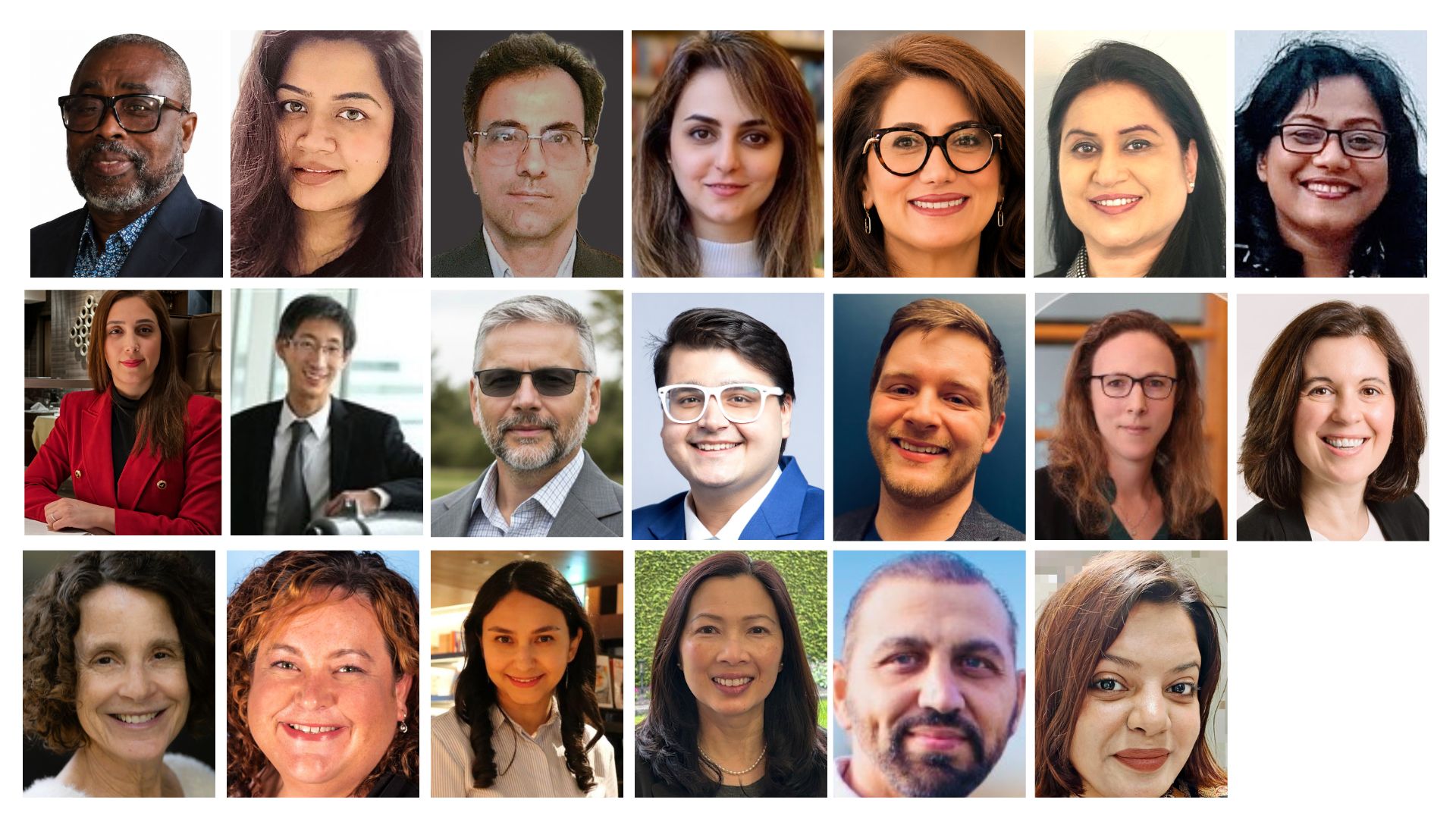
The Office of Academic Research is proud to announce the recipients of the Support for Scholarly Activity Fund (SSAF) — Spring 2026.
SSAF supports faculty and staff in advancing scholarly, creative, and applied research aligned with Yorkville’s academic mission and Boyer’s Model of Scholarship, fostering high-quality scholarly activity that advances knowledge, improves teaching practice, and strengthens professional and community engagement.
This spring’s recipients take on some of the most pressing questions in higher education today: the rise of generative AI and its impact on critical thinking, strategic decision-making, and AI literacy; innovative approaches to faculty wellbeing; supplemental instruction and student success; active learning classroom design; and the effects of return-to-office mandates. We’re inspired by their commitment to advancing knowledge and excited to see where their research leads.
Please join us in congratulating the following outstanding scholars and celebrating their important work:
Christian Tabi Amponsah and Donna Chrowdhury (BBA, New Westminster Campus):
Framing Faculty Wellbeing as Infrastructure: Evaluating Reflective Peer Circles in Experiential Education
The research aims to design, implement, and evaluate a Holding Space Peer Circle Model addressing emotional labor and relational demands among faculty in high-contact experiential teaching. It contributes to the SoTL by addressing an underexplored dimension of experiential education: faculty wellbeing. The project offers a scalable and adaptable model that can be applied across disciplines and institutions. By positioning faculty wellbeing as a shared and structural responsibility rather than an individual concern, this research contributes to ongoing conversations about sustainable teaching practices in higher education.
Christian Tabi Amponsah is a full-time professor at BC campus. He holds a Ph.D. in Organization and Management from Capella University, USA, and MBA and a Civil Engineering degree from University of Leicester, UK. As a Professional Engineer and Project Management Professional with a strong academic and industry background, Chris has over 35 publications in top-tier journals and serves on the editorial boards of two leading research outlets. His professional experience spans North America, the Middle East, and Africa, reflecting a diverse and global perspective.

Donna Chowdhury is a BBA professor at BC campus with a multidisciplinary background in business, engineering, and education. She holds CPHR, PMP, and CMBE designations. Her teaching focuses on engagement-first pedagogy, psychological safety, and career readiness in post-secondary contexts. Her current research examines faculty wellbeing in experiential education. Her scholarly work draws on autoethnography and reflective practice, traversing domains of AI, uncertainty, and decision-making. Her work has appeared in top journals and includes the ‘Digital Belonging Toolkit’ created for BC campus Digital Learning Strategy Forum 2025.

Hossein Hakimpour (BBA, New Westminster Campus)
AI-Assisted Strategic Thinking: Evaluating the Impact of Generative AI on Analytical Quality and Cognitive Processes in Management Students
This project examines how generative AI influences strategic thinking and cognitive processes among business students. Through a classroom-based research design, the study compares traditional strategic analysis with AI-assisted approaches to evaluate their impact on analytical depth, originality, strategic insight, and decision quality. It seeks to understand both the benefits and risks of AI-enabled learning, including potential concerns related to overreliance and reduced independent reasoning. It will generate evidence-based recommendations for responsible human–AI collaboration in management education and develop practical teaching resources to support curriculum innovation and the development of critical thinking in AI-enabled learning environments.
Hossein Hakimpour is a faculty member in the BBA program at Yorkville University. His research focuses on strategic management, artificial intelligence, strategic thinking, and organizational decision-making. He has more than 23 years of academic, research, and leadership experience and has supervised numerous master’s and doctoral research projects. Hakimpour is the author of Strategic Thinking with AI: Foresight, Tools, and Leadership for the Digital Age (Palgrave Macmillan, 2026). His current research explores effective human–AI collaboration and the impact of AI on learning and decision-making.

Shabnam Javanmard (Liberal Arts, New Westminster Campus)
How Faculty with Different Boundary Preferences Respond to RTO in Terms of Thriving, Flourishing, and Work-Nonwork Balance: A Quasi-Experimental Study
This research investigates how faculty boundary preferences moderate the relationship between RTO mandates and three wellbeing outcomes: thriving at work, flourishing, and work-nonwork balance satisfaction. The study will generate actionable insights to guide organizations in building healthier, more flexible workplaces. The results will help leaders and policymakers make evidence-based decisions that enhance productivity, engagement, and retention while safeguarding employee well-being. This project contributes to applied, practice-oriented scholarship for promoting mental health, work–life balance, and digital learning innovation.
Shabnam Javanmard holds a Ph.D. in Psychology with a specialization in Industrial/Organizational Psychology. Her research focuses on workplace well-being, personality dynamics, and organizational behavior. She has authored and co-authored numerous peer-reviewed publications in both English and Persian journals. Dr. Javanmard has extensive university teaching experience and expertise in workplace training on stress management and work–life balance. Her strength lies in integrating research and practice to generate evidence-based insights that advance Yorkville University’s applied research mission.
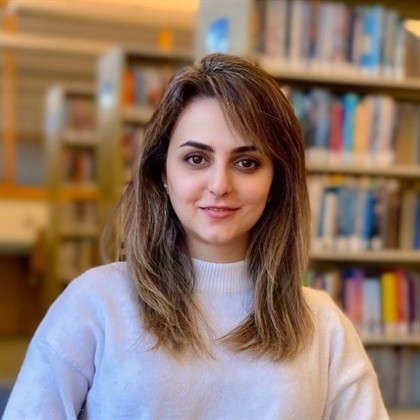
Nikki Sohaee, Simmar Preet, and Tahmina Akhter (BBA, Ontario Campus)
Entrepreneurs and Generative AI: Evaluating Adoption, Usage Patterns, and Strategic Impact in Small and Medium Enterprises
This research investigates GenAI adoption patterns and strategic impact in SMEs, including value creation, innovation, efficiency, decision-making, and associated risks (bias, privacy, over-reliance). It contributes to both academic scholarship and entrepreneurial practice by mapping the strategic implications of GenAI adoption in SMEs, providing actionable insights for entrepreneurs on ethical and efficient AI use, and supporting Yorkville University’s strategic goals in digital innovation, applied research, and entrepreneurship education. The findings will strengthen Yorkville’s position as a leader in research addressing the intersection of technology, ethics, and business strategy.
Nikki Sohaee is a Professor in the BBA program whose research focuses on entrepreneurship, innovation, business strategy, and generative AI. She is an active interdisciplinary researcher and mentor committed to strengthening research rigor and real-world impact.

Simmar Preet (PhD, PMP, PMI-ACP), brings over 25 years of teaching experience at the graduate and undergraduate levels. Core areas of expertise span project management, sustainability, corporate disclosures, and business. She has supervised five PhD projects, published three books, and authored numerous papers in reputed journals. Recognized by University of Delhi with Teaching Excellence Award for Innovation (2015), She also served as project consultant on AFFECT, a US Department of State- funded international initiative, and has led four innovation projects, two earning top accolades for innovation and societal impact.

Tahmina Akhter holds a PhD in Applied Mathematics and brings over 15 years of experience in teaching, research, and academic leadership. Her scholarly work focuses on statistical analysis, quantitative modeling, and applied data science, with applications spanning business, economics, and social sciences. She has extensive experience translating complex analytical concepts into practical, data-driven insights.

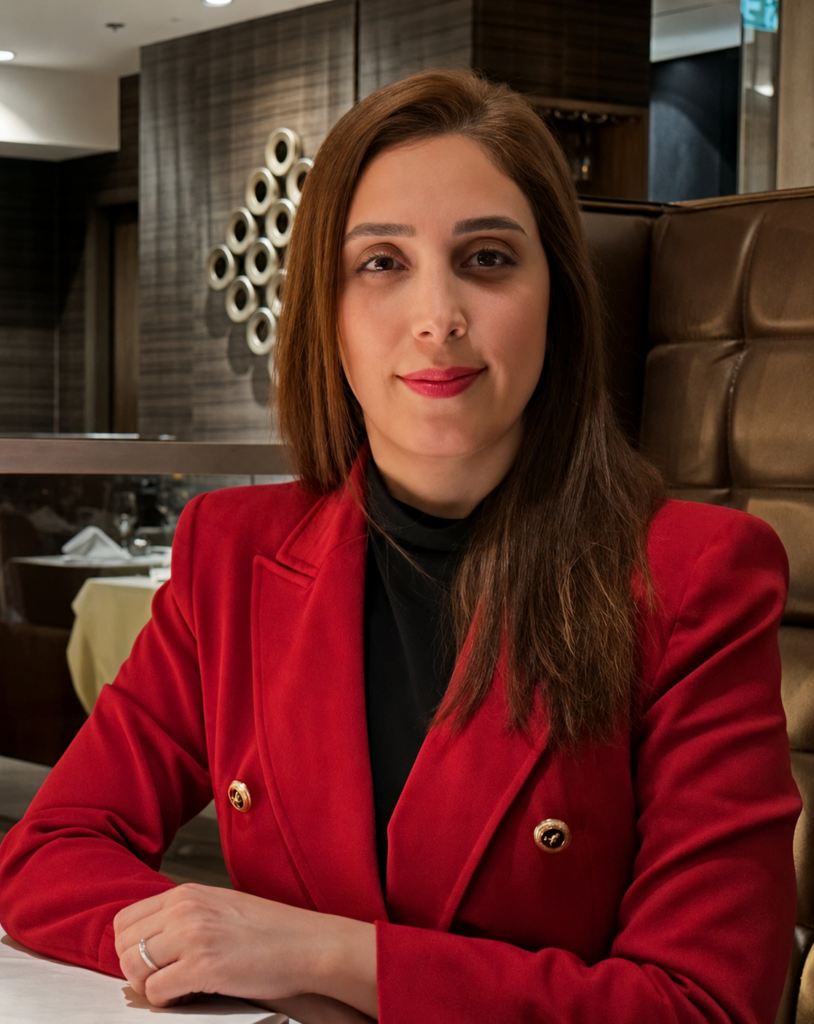
Niloofar Ashktorab (BBA), Syed Hussain (BBA), Wallace Chan (BBA), Tristan Wright (Director, Student Experience), and Rajat Virdi (Manager, Student Life,) (New Westminster Campus)
Exploring the Impact of Supplemental Instruction on Student Success, Engagement, and Help-Seeking: A Qualitative Research Study at Yorkville University
This research explores how YU’s Supplemental Instruction (SI) program influences student learning beyond grades—specifically skill development, engagement, sense of belonging, and help-seeking willingness. By examining multiple dimensions—academic success, skill development, engagement, help-seeking, and participation barriers—this research offers a more holistic understanding of SI that complements and extends existing quantitative findings. This research directly supports the academic mission of Yorkville University by advancing evidence-based approaches to student success in a flexible and online learning context.
Niloofar Ashktorab (PhD, MBA) is a full-time faculty member in the BBA program at BC Campus. An educator and researcher with expertise in Economics, Business Analytics, Sustainability, and data-driven decision-making, her research focuses on environmental sustainability, resilience, resource management, optimization modeling, and the application of analytics to complex economic and social challenges. With over a decade of teaching experience, she has published in peer-reviewed journals and presented her work at national and international conferences, contributing to interdisciplinary conversations on sustainability, policy, and evidence-based decision-making.
Wallace Chan holds a master’s degree in economics and a bachelor’s degree in education and commerce. He joined Yorkville University in 2019. With twelve years of experience in Higher Education, Wallace has taught a variety of subjects, including Microeconomics, Macroeconomics, International Business, Business Communication, Marketing and Business Ethics.

Syed Hussain holds a master’s degree in economics, a bachelor’s degree in engineering, and the Certified Training and Development Professional Designation. His expertise spans teaching, learning and development, project management, curriculum design, applied research, and professional training, with a strong commitment to bridging academic knowledge with practical industry applications. With over 25 years of experience in higher education, corporate training, curriculum development, and organizational leadership, his research interests include labor market analysis, industrial organization, applied economics, management education, and the integration of AI in teaching and workplace learning.

Rajat Virdi is the Manager of Student Life at Yorkville University (BC Campus), and a current MBA student. Holding a BA in English and Publishing, he is a student-centric education professional driven by a commitment to holistic education, student engagement and support, and fostering vibrant campus communities beyond the classroom.

Tristan Wright is Director of Student Experience at Yorkville University’s British Columbia campus, where he oversees registrar, advising, and student life services. His professional interests include student persistence, student support innovation, and the strategic design and implementation of change in higher education. Tristan holds a Master of Education with a specialization in Leadership and leads initiatives focused on student success, retention, and evidence-informed approaches to improving the student experience.

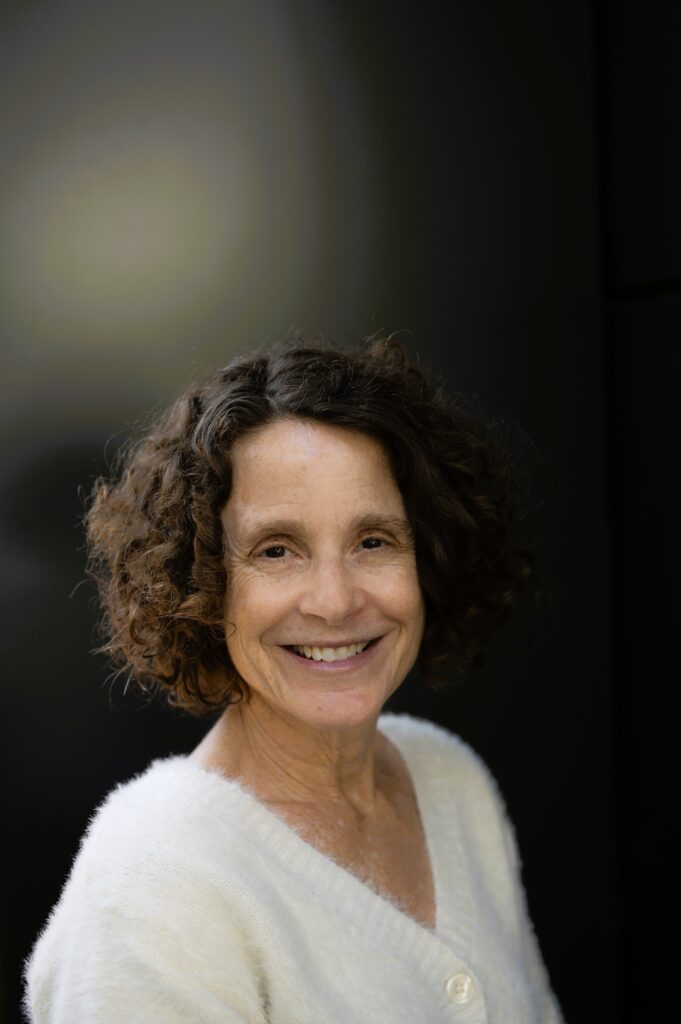
Laura Kinderman (VPA, New Westminster), Natasha Hannon, (VP, Teaching & Learning), Kate Wiley, (external, Educational Developer, Niagrara College), and Lydia Watson (external, Faculty, Capilano University)
Disclosure Decisions: How Faculty Identities and Academic Norms Shape Teaching-Related AI Disclosure in Canadian Postsecondary Institutions
Since the public release of generative AI tools such as ChatGPT in 2022, post-secondary institutions have emphasized transparency as a core principle of ethical AI use. Disclosure—explaining whether and how AI contributes to academic work—is now widely expected across teaching, assessment, and curriculum design, aligning with commitments to integrity and trust. However, these assumptions and their underlying context are rarely examined in relation to faculty experience or broader social dynamics. Emerging research suggests disclosure can carry social penalties, with users perceived as less competent or trustworthy, and effects unevenly distributed across groups. In academic contexts, where credibility depends on expertise, judgment, and creativity, disclosure may disrupt norms of legitimacy and perceived quality. This project advances YU thought leadership by examining how faculty anticipate and navigate these risks, reframing disclosure as socially situated and supporting more context-sensitive, equitable, and faculty-centered approaches to AI transparency.
Laura Kinderman is Principal and Vice President, Academic BC at Yorkville University. She brings over 17 years of experience in higher education and leadership and has a passion for bringing out the best in people, co-creating academic innovation in evidence-informed ways, and facilitating strategic growth and transformation. Known for her collaborative and inclusive approach, Laura is an educator, scholar, and coach with a diverse and active teaching and research background. Throughout her career, Laura has collaboratively built teams in disciplinary, interdisciplinary, and interprofessional contexts. She has led the development of new programs, policies, and quality assurance processes as well as system-level changes that have sustained impact at an institutional level.

Natasha Patrito Hannon is Vice President, Teaching & Learning at Yorkville University and Toronto Film School, overseeing curriculum, faculty support, and libraries across three provinces. With 20 years of leadership in Canadian public and private post-secondary institutions, she advances innovative, inclusive programs responsive to student and employer needs. She has led multi-institutional research and open educational resource initiatives, program development and renewal, and enterprise system change efforts, including LMS transitions and campus redesign efforts. Dr. Hannon has chaired the NSERC CREATE Program Review Committee and held leadership roles in provincial and national educational development organizations, strengthening peer review, governance, and quality assurance practices.

Lydia Watson (she/her) has been a faculty member at Capilano University for 18 years where she is currently an educational developer with the Centre for Teaching Excellence and an instructor in the faculty of Business and Professional Studies. She holds a Master of Education in Curriculum Studies from the University of British Columbia, and her teaching and learning scholarship is focused on trauma aware pedagogy, and the importance of care in teaching. Her work always places people at the heart center.
Kate Wiley (she/her) is an Educational Developer, Accessibility and Inclusion, and an instructor of psychology and sociology, at Niagara College. She holds a Master of Education in Adult Education from Yorkville University. She is interested in the intersections of critical andragogy, universal design for learning, organizational psychology, and institutional culture within higher education. Kate’s work explores psychological safety, belonging, faculty development, and the impact of emerging educational practices on inclusive teaching and learning. Through professional and community leadership, she is committed to advancing equitable and inclusive post-secondary learning environments.

Aida Kazemi and Tuyen Riddell (BBA, New Westminster Campus), and Adnan Ul Haque (BBA, Ontario Campus)
Assessing Teaching and Learning in FLEX YU Classrooms – Faculty Perception
The FLEX YU project investigates how Active Learning Spaces influence student engagement, confidence, and learning experiences in higher education. This study examines the impact of these environments on teaching and learning through a mixed-methods approach that includes student surveys, faculty reflections, classroom observations, and qualitative feedback. By exploring how physical space, technology, and pedagogy interact, the project aims to identify practices that foster meaningful engagement, collaboration, and deeper learning. The findings will contribute to the SoTL literature and provide evidence-based recommendations for the design, implementation, and evaluation of innovative learning environments in higher education.
Aida Kazemi is a faculty member at Yorkville University with over a decade of experience in higher education. Her teaching focuses on active learning, experiential education, and creating inclusive environments that support student success. Her research interests include innovation in pedagogy and andragogy, active learning spaces, student engagement, and the impact of emerging technologies. Through projects such as FLEX YU, she explores how classroom design, technology, and teaching practices can enhance learning experiences and contribute to evidence-based improvements in higher education.

Tuyen Riddell is a full-time faculty member in BBA at New Westminster campus with more than 20 years of post-secondary teaching experience. Holding an MBA and a BSc in Biochemistry, she brings a unique blend of academic expertise and industry leadership to her classes. Throughout her career, she has taught diverse business disciplines, contributed to curriculum development, accreditation, and program review initiatives, and championed student success through experiential learning.
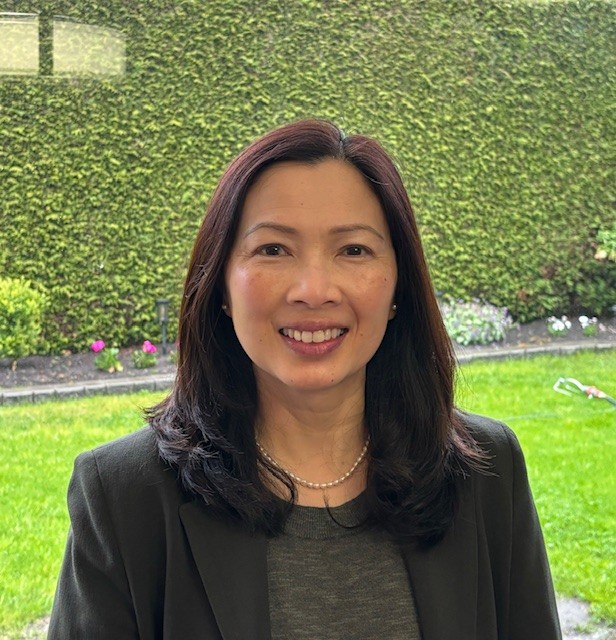
Adnan Haque is a BBA professor at Ontario Campus. He holds a DBA in Organizational Behaviour from the University of Wales Trinity Saint David, UK, specializing in gender‑related occupational stress. He is a certified PMP and PMI‑ACP. Dr. Haque serves as Session Chair, Keynote Presenter, and external PhD examiner. He has edited seven books for Routledge, Palgrave Macmillan, Springer, and MDPI. His research spans organizational behaviour, entrepreneurship, business ethics, HRM, sustainability, and occupational stress. He has published numerous articles and presented keynotes at international conferences.

Priya Pandey (BBA, New Westminster Campus)
Bridging the Gap: Exploring AI Literacy and Workforce Readiness Among Business Students in Canadian Post-Secondary Institutions
As AI becomes embedded across industries, from financial modelling to supply chain management, employers increasingly expect graduates to understand, apply, and critically evaluate these technologies. Yet structured AI literacy development remains largely absent from undergraduate business curricula, and what Canadian business students actually know remains largely unmeasured. Drawing on empirical survey data collected from business students across Canadian post-secondary institutions, followed by focus groups, this study measures current AI literacy levels, assesses workforce readiness perceptions, and identifies barriers to stronger preparation. Findings will directly inform actionable curriculum recommendations, contributing practice-oriented scholarship at the intersection of business education, digital competency, and the future of work.
Priya Pandey is a full-time faculty member at YU with a background in business administration and a sustained scholarly interest in digital transformation, organizational strategy, and the evolving relationship between technology and professional practice. Currently completing her Doctor of Business Administration (DBA), she brings hands-on experience in mixed-methods research design, including survey instrument development, quantitative analysis, and qualitative inquiry, that maps directly onto this project’s methodological requirements. She will lead all phases of the work: design, data collection, analysis, writing, and dissemination.

The OAR would like to sincerely thank all applicants for their passion for and commitment to Yorkville research development. Please keep an eye out for more information about our next call for the Fall 2026 Call for Proposals in August 2026.
Congratulations to all of this Spring’s grant recipients! Thank you for your passion, creativity, and dedication to advancing knowledge. Yorkville University is incredibly proud to support your work, and we can’t wait to see the impact it will have.
We also extend our sincere gratitude to the SSAF Committee: Michele Bertussi (BID faculty, ON), Jo Chang (DCP faculty, NB), Leonard Danglli (Assistant Dean of Liberal Arts), Wendy Kraglund-Gauthier (Associate Dean, M.Ed.), Rosina Mete (Director of Scholarly and Mental Health Initiatives, MACP, NB), Umeka Naidoo (BBA faculty, BC), and Steven Noble (M.Ed. faculty, NB), for their thoughtful and rigorous review of this year’s applications. Their dedication ensures that the SSAF continues to recognize and elevate the very best of our scholarly community.
Please join us in celebrating these remarkable colleagues!
Learn more about the SSAF scope and application information and stay tuned for our next call for proposals at the website above!